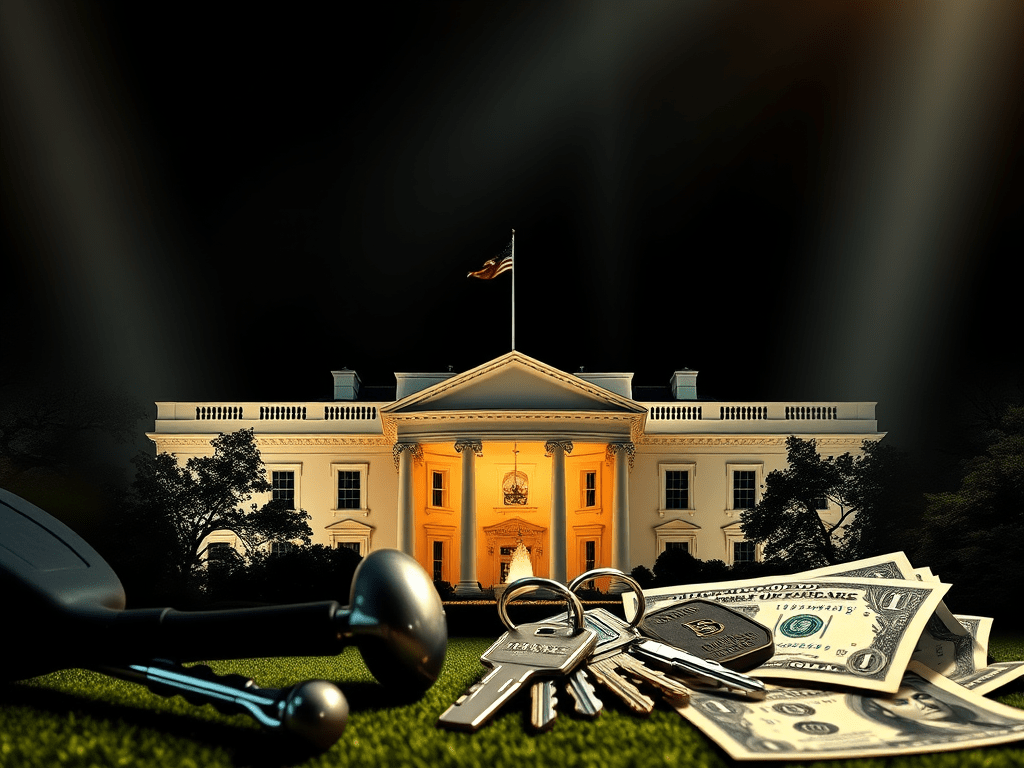
The Trump family has repeatedly blended public power with private profit, turning the modern presidency into a revenue engine for their businesses, brands, and financial deals. Multiple investigations, watchdog reports, and financial trackers document billions in direct and indirect gains tied to Donald Trump’s time in office and his status as the current president.
A presidency turned business model
From the moment Donald Trump first entered the Oval Office, he refused to fully divest from the Trump Organization, keeping a direct financial stake in hotels, golf clubs, and licensing deals that could benefit from his political power. Ethics experts warned that this structure created unprecedented conflicts of interest, because any decision that boosted the Trump brand also boosted the president’s personal income.
Watchdog groups and journalists estimate that Trump’s time in the White House has translated into billions in revenue and at least hundreds of millions in extra profit for his private clubs, especially Mar‑a‑Lago, which effectively became an exclusive political clubhouse for donors, lobbyists, and foreign interests. Membership prices and event rates rose sharply as access to the president became part of the product.
Foreign money and the Emoluments problem
One of the clearest profit streams came from foreign governments and state‑linked entities spending heavily at Trump properties while seeking favorable treatment from his administration. Congressional records and accounting documents show that at least 20 foreign governments spent millions at Trump hotels and buildings during his first term, including more than $750,000 at the Trump International Hotel in Washington, D.C., by just six countries such as Saudi Arabia, Malaysia, and China.
A detailed analysis by an ethics watchdog concluded that Trump likely benefited from at least $13.6 million in payments from foreign governments to his businesses during his initial stint in office, raising serious questions under the Constitution’s Foreign Emoluments Clause, which prohibits a president from profiting from foreign states without congressional approval. Many of these payments coincided with sensitive diplomatic moments, suggesting that hotel bills doubled as a quiet channel for influence.
Key foreign‑government profit channels
- Luxury stays and events at Trump’s D.C. hotel by Gulf monarchies and other foreign delegations during key policy negotiations.
- Payments tied to foreign missions and embassies renting or using space in Trump‑owned buildings in New York and elsewhere.
- Lobbyists and firms representing foreign governments booking rooms and events at Trump properties while advancing their clients’ agendas.
Family brands, trademarks, and foreign deals
The Trump children leveraged their White House proximity and advisory roles to expand their brands and investment vehicles, often in ways that overlapped with U.S. foreign policy. Ivanka Trump, serving as a senior adviser, continued to benefit from her fashion and lifestyle brand as it secured dozens of fast‑tracked trademarks in China and other countries while the administration negotiated trade and technology disputes with those same governments.
Chinese authorities approved at least 34 Ivanka‑related trademarks by 2019, covering a wide range of products and services that positioned her to profit from one of the world’s largest markets. Ethics organizations highlighted the timing of these approvals alongside her father’s shifting stance on Chinese telecom firms and trade penalties as a textbook example of blurred lines between diplomacy and private gain.
Jared Kushner’s private equity fund, launched after his White House role, secured a multibillion‑dollar investment from a Saudi sovereign wealth vehicle run by the crown prince, despite internal objections from that fund’s own advisers about Kushner’s lack of track record and the risk of appearing to pay off the family of a president. The deal cemented how the family’s political connections translated into direct, large‑scale capital inflows from foreign rulers.
Second term: crypto, clubs, and cash
Trump’s return to the presidency has only intensified the profit‑seeking behavior, with allies and family members openly rejecting the limited “self‑restraint” they claimed to observe during his first term. Reports describe a “frenzy” of deal‑making, in which almost no opportunity to monetize his political stature is left on the table.
Several new money streams now sit at the center of Trump‑world’s business model:
- Meme coins and crypto ventures: A Trump‑branded cryptocurrency project and related trading activity have generated hundreds of millions in fees and speculative gains for the family and its partners, with the token’s value directly tied to Trump’s political prominence and decisions.
- Stablecoin reserves: A policy‑focused think tank’s financial tracker estimates the family earning tens of millions from interest on reserves backing a Trump‑linked dollar stablecoin, creating a private income stream built atop a financial asset marketed around Trump’s political identity and rhetoric about “sound money.”
- Trump Media and social platforms: Trump Media, which runs his social media platform, functions as both a political megaphone and a stock‑market vehicle that channels investor enthusiasm and partisan loyalty into equity value and potential dividends for the Trump family.
- Expanded club and resort monetization: Second‑term travel and events at Trump‑branded golf courses and clubs have risen sharply, with watchdog tallies documenting more frequent presidential visits and political events that steer campaign and government‑adjacent spending into Trump properties.
Why this matters
Ethics experts warn that this level of presidential profiteering erodes basic democratic norms by making policy choices inseparable from the president’s and his family’s financial interests. When foreign governments, corporations, or donors can effectively “buy in” through hotels, clubs, investment funds, or crypto projects, citizens cannot be sure whether decisions are made for the public good or private enrichment.
Nonpartisan reform groups have used the Trump era as Exhibit A in arguing for stronger divestment rules, mandatory transparency about presidential finances, and tighter limits on family members’ business dealings while they serve in or closely advise the executive branch. Whatever one’s politics, the Trump family’s profit machine around the presidency has redrawn the boundary between public office and private wealth—and shows how fragile that boundary can be without robust guardrails.



 Sheriff of Nottingham
Leave a comment