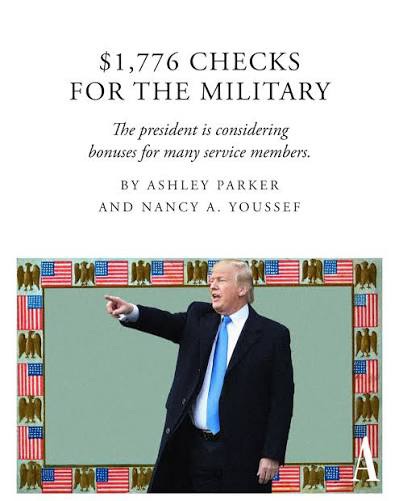
The money for the $1,776 “1776 checks” (the so‑called Warrior Dividend) is not new tariff revenue or a brand‑new stimulus pot; it is being pulled from existing, already‑appropriated military housing funds that Congress had previously approved.[1] [2] [3]
What the 1776 checks are
President Trump announced a one‑time $1,776 payment to roughly 1.4–1.45 million active‑duty service members as a “warrior dividend” to be delivered before Christmas, framing it as a patriotic bonus tied to the year 1776.[4] [5] [6] Public estimates put the total cost in the ballpark of around $2–2.6 billion, depending on the exact number of eligible troops.[7] [8] [9]
Claimed source vs. actual source
In his speech, Trump credited tariffs and “extra money” for making the checks possible, suggesting trade duties had generated the funds.[10] [11] However, reporting from multiple outlets and defense‑policy sources indicates that the money is actually coming from Congressionally allocated reconciliation funds intended to support service members’ housing costs, particularly the Basic Allowance for Housing (BAH) bucket created in the earlier “One Big Beautiful Bill” spending package.[12] [13] [14]
How the funding shift works
Those BAH‑related funds were originally meant to help cover elevated out‑of‑pocket housing expenses over a longer period, essentially cushioning troops against high rents and other housing costs.[15] [16] The Pentagon has instead chosen to repackage that pool of money into a single, one‑time cash payment—the $1,776 check—rather than distributing it as ongoing monthly housing support as originally envisioned.[17] [18]
Tax and budget implications
Because the money is being run through defense and housing‑related accounts rather than created as a standalone tax‑free bonus in statute, there is still uncertainty over whether the payments will be treated as taxable income, which could reduce the net amount troops keep after withholding.[19] [20] Budget analysts note that this move does not increase overall defense spending in the short term, but it repurposes housing assistance into a headline‑grabbing lump sum, potentially leaving less room for longer‑term housing relief unless Congress backfills those accounts later.[21] [22] [23]




 Sheriff of Nottingham
Leave a comment